patientawareness.in

Fever : Causes, Symptoms, Treatment and Prevention.

Common causes, symptoms and care for fever

What is Fever?

A fever – also known as high temperature – is not by itself an illness. It’s usually a symptom of an underlying condition, most often an  infection.
A fever technically is any body temperature above the normal of 98.6 F (37 C), in practice a person is usually not considered to have a significant fever until the temperature is above 100.4 F (38 C).
Fever is usually associated with physical discomfort, and most people feel better when a fever is treated.
Infections are the most common cause. There are also other non-infectious causes of fever.
What is Fever?

Risk of Infection

While monsoons are lovely to feel and enjoy, your risk of infections and associated fevers increases manifold during monsoons!!
There’s a greater risk of infectious

Fevers
in Monsoon

Fevers in Monsoon
Infectious fevers staring at you during
monsoons!!
Dengue
Typhoid
H1N1
infection
Seasonal
Flu
Malaria
Chikungunya
Leptospirosis

Fever Symptoms

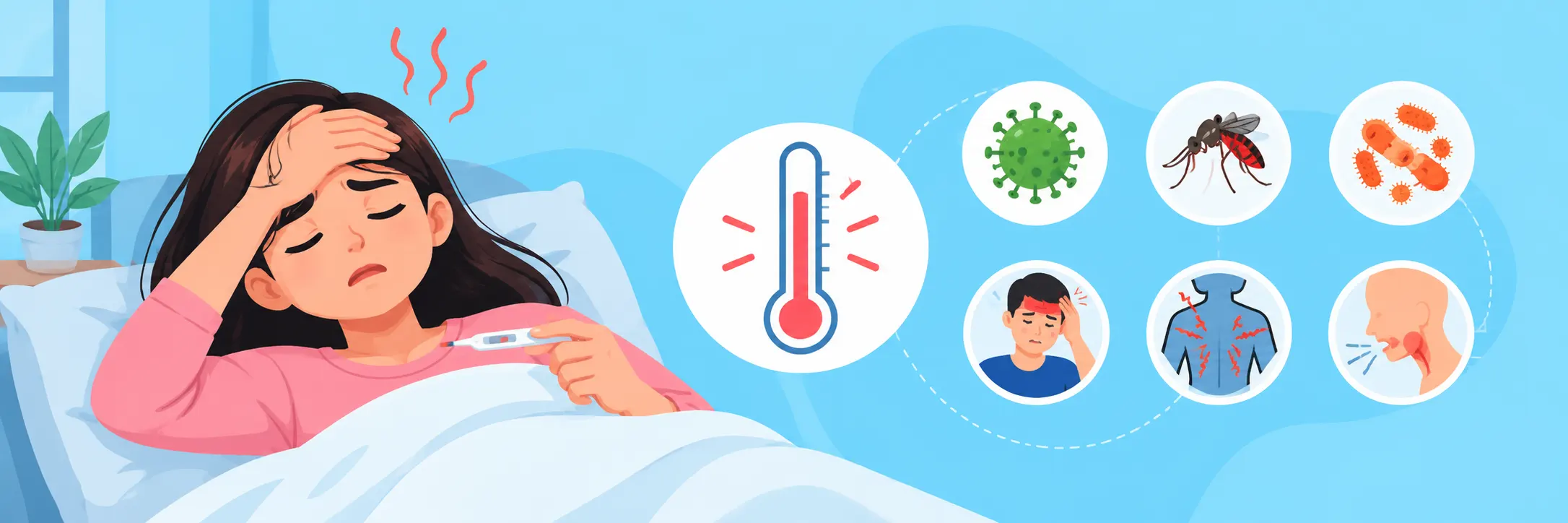
Fever is a temporary rise in body temperature and often occurs when the body fights an infection. Common fever symptoms include a high temperature, chills, sweating, headache, muscle aches, weakness, and loss of appetite. Some people may also experience dehydration or tiredness. Symptoms can vary depending on the underlying cause.

Common Causes of Fever

The causes of fever can range from mild infections to more serious illnesses. Common causes include viral infections such as colds and flu, bacterial infections, and certain inflammatory conditions. In India, mosquito-borne illnesses such as dengue, malaria, and chikungunya may also cause fever. The cause cannot always be identified from symptoms alone, so medical evaluation may be necessary.

Fever Treatment

Fever treatment depends on the cause, the person’s age, and the severity of symptoms. Rest, adequate fluids, and monitoring body temperature can help support recovery. A healthcare professional may recommend medication to relieve discomfort when appropriate. Antibiotics are useful only for certain bacterial infections and should be taken only when prescribed. Do not start antibiotics or other medicines without appropriate medical advice.

How to Reduce Fever Safely

If you want to know how to reduce fever, start by drinking water regularly, getting enough rest, and wearing lightweight clothing. Keep the room comfortably cool and avoid heavy blankets. Paracetamol may help relieve discomfort when used according to the product label or a healthcare professional’s advice. Never give aspirin to children or teenagers unless specifically directed by a specialist. Avoid ice baths and alcohol rubs.

Fever Prevention Tips

Fever prevention starts with reducing the risk of infections. Wash your hands regularly, maintain good food and water hygiene, and keep vaccinations up to date. In areas where mosquito-borne diseases occur, use mosquito repellent, wear protective clothing, and remove stagnant water around your home. Avoid close contact with people who are unwell when possible.

When to See a Doctor for Fever

Knowing when to see a doctor for fever is important. Seek urgent medical care if fever occurs with difficulty breathing, confusion, seizures, a stiff neck, severe dehydration, unusual bleeding, or severe abdominal pain. A baby younger than three months with a temperature of 38°C (100.4°F) or higher needs immediate medical evaluation. Adults should consult a healthcare professional if fever persists, worsens, or is accompanied by concerning symptoms.

Final Thoughts

Fever is a common symptom, but its cause and severity can differ from person to person. Rest, fluids, and appropriate care may help manage mild fever, while persistent or severe symptoms need medical attention. Avoid self-medication and consult a healthcare professional if you are unsure about the cause or the right treatment.

0